
March 3, 2011
Information Graphics Contest
VISUALIZE YOUR TAXES
I know we might not all deal with our taxes (thanks parents!) but this is actually a contest for visualizing FEDERAL taxes! Like it says on the website, they give the numbers, you make the pretty graph! I only scanned the information on the page, but it seems legit. You can work individually or as a team, and you can submit up to 2 projects! It can be web interactive, image, or video.
Woo!

March 2, 2011
Atypeical: Freshman Pep Squad
For my portion of the freshman information/presentation I produced the circular information leave behind and the small remind card. One thing that we wanted to emphasise was the importance of the time factor in the production and presentation of all the elements of information. Altogether, we wanted to create:


Instead of bombarding the freshmen with a ton of information and then leaving them to forget about it, we decided it would be best to do it in this sort of order:
- Simple to print and post flyer
- 1 or 2 very large, colored posters for IMPACT
- Circular flyer
- Email New Letter
- Business card-sized reminder (to be left on their desk)


Instead of bombarding the freshmen with a ton of information and then leaving them to forget about it, we decided it would be best to do it in this sort of order:
- sneak peak sort of thing
- information
- information with examples of work (presentation)
- reminded a couple days beforehand
Atypeical: Image Selection and Copy Refinement
For this round of work done, I was on the copy-refinement team and on the team that narrowed down the images that we are going to use on all the materials.
For the type, we didn't want to do a lot of BIG changes. After all, we spent a whole class period earlier back synthesizing the tagline and description we wanted to use. So, Bethany and I created a sort of web of options, with some slight word variations, so that a vote could be easy. As for the copy, we just tweeked a phrased here and there, and made some variations on that for good measure and to make sure we covered everything!
 For the image selection, we wanted to focus on having a variety of images, both digital and analog. These images needed to have a certain degree of abstractness to them, so that they did not conflict with and copy that went on top of them and did not compete with the logo.

Atypeical: Starting to Finesse
Before class:
I spent time playing with many different type lockups and typefaces choices for the combination of the symposium name and the tagline. Then I selected an image from some of the ones that Karen produced, and placed the type on top of it. I wanted to try and keep the idea that I had from last class, where I made bars that reflected the nature of the image behind it. This round was...not so successful.

 During class though, I was part of the team that was working on a logo shape! Here were my brainstormings that I pumped out during the hour we worked:
 I wanted to use the circle idea we had going, in correlation with the idea of the exchange of ideas or "round table" feeling our symposium will have. The idea that I liked the best was the overlapping, rotated ovals. They were originally circles, but I felt that a more flat shape would help lend itself to the shape of the text that would go inside.


Atypeical: Continueing with the Direction
Now that we were starting to tighten up the visual elements of the symposium, I created this mock postcard and webpage as an example of the branding I was thinking of. I wanted to create elements that could be subbed out, like the background image, and matched with bars or other visual elements to make a variety of artifacts with an underlying unity.

 I used my own images as the example. Since the images were made using folded paper, the banner and bar on the webpage and postcard, respectively, were treated in a manner that gave them an abstract 'folded' feeling.

 I used my own images as the example. Since the images were made using folded paper, the banner and bar on the webpage and postcard, respectively, were treated in a manner that gave them an abstract 'folded' feeling.
Atypeical: A Direction
In this exploration, I set out to make some sort of theme based off of a hastily-whipped-up experimental type. This was a lot of fun to play around with, but ultimately I ran into a couple road blocks, and regardless, this got scrapped.
 I arranged the paper shapes into the different letters of the name "Atypeical" and photographed them at varying angles. My initial idea was to make the whole symposium name out of these shapes, and maybe make it into a workable logo. The concept behind it all was again the idea of the many parts or players that came together to make this symposium, including the class and the people who come to the symposium. But after laying them out all together, I was unsatisfied with how it all came out. It looked like a cross between a beehive and an icecube tray! Luckily I did glean some stuff from the individual photos.


While the letters together seemed like a mistake, the individual letters very really interesting! It created a nice texture, nice dimension, and were visually interesting. It was after making these and laying them all out that I thought that traditional text would best suit these.
 I arranged the paper shapes into the different letters of the name "Atypeical" and photographed them at varying angles. My initial idea was to make the whole symposium name out of these shapes, and maybe make it into a workable logo. The concept behind it all was again the idea of the many parts or players that came together to make this symposium, including the class and the people who come to the symposium. But after laying them out all together, I was unsatisfied with how it all came out. It looked like a cross between a beehive and an icecube tray! Luckily I did glean some stuff from the individual photos.


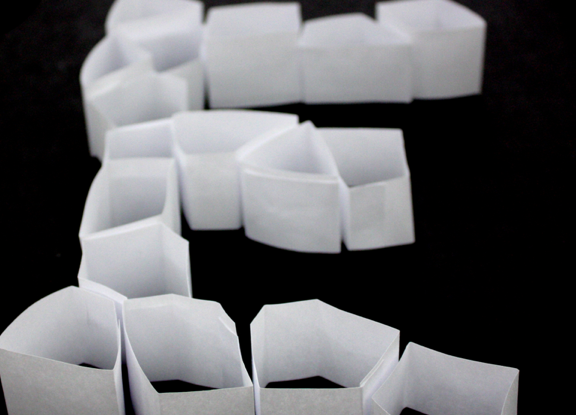
While the letters together seemed like a mistake, the individual letters very really interesting! It created a nice texture, nice dimension, and were visually interesting. It was after making these and laying them all out that I thought that traditional text would best suit these.
Atypeical: Initial theming ideas
So here are some of the brainstormings of the earliest stages of the Atypeical branding. I had messed around with some different ideas, mostly staying in black in white for the sake of keeping it simple and allowing it to be put on any media.
At first I though an idea that involved the sort of "pieced together" nature of the symposium, because it was made from 12 people collaborating. I had some weird idea of playing with negative space, and pushing the legitiblity. This looked very silly. Execution was not spot on.
 Then after this, and after looking at the brainstorming wall of images that people put up, I thought of trying to appeal to the high school audience and play to the nature of the work "atypical." Barcodes seem like the ultimate symbol for conformity (I feel like I'm in high school when I say that word) and that making a theme of altered or broken barcodes might look nice. Again, I messed with the negative space, putting the symposium name inside. Then I played around with different ways to alter the shape, and then played around with the idea of making so sort of wayfinding/signage system.

March 1, 2011
Researching PSAs
1. Baby Boomer Care Givers: A Need for Hygiene
1. why is this issue pertinent and timely?
Basic hygiene and good health are issues that are being brought up a lot in the news. Between scares like the N1H1 flu and more non-specific causes for poor health like germs in the house and not taking proper precautions with physical tasks (such as heavy lifting), there are a lot of illnesses and injuries that can be prevented from just taking basic precautions.
2.what are its causes?
Illness and injury can be caused because of inattention or ignorance to health and wellness standards. Poor personal hygiene, hygiene in public spaces and in private homes. Lack of proper tools (machinery or things like braces) to help with physical tasks at home or work.
3. what are detrimental effects to individuals? to greater society?
To individuals, the effects can range from light to serious consequences.
Light: some sicknesses are contracted or light injuries that heal over time happen. In a serious case, lack of personal health and safety can result in contracting life-threatening diseases or injuries that could change their lives permanently (and also cost them a lot of money, loss of mobility, loss of job, etc-many consequences).
To the greater society, most of the same holds true. In public places, poor hygiene can lead to outbreaks or viruses or sicknesses that spreads to effect everyone. Children and employees of large companies are examples of people that are stuck in high-traffic, close-proximity quarters with their peers, and it often only takes one sick person to turn the place into a hot zone.
4. what are preventative measures?
Simple health and hygiene can prevent these things.
washing your hands regularly
cleaning objects that you use regularly but might not think about (light switches, doorknobs, fridge handles, sink knobs, etc)
being aware of high-risk areas in public spaces (bathrooms, food tables, telephones)
thoroughly cleaning your home/all surfaces
5. how does this issue relate to your sub-culture?
they are getting older, with comes with a weaken immune system. In addition, the caretaking that they do can put extra physical and mental strain on their bodies, making them more likely to get hurt or sick. This is also an important nature because of the nature of their work and who they work with. They come into close contact with their patient all day. If they are sick, they will not be able to efficiently take care of their patient. Also, the patient might have a weak immune system depending on their circumstances. It is in both of their interest to keep themselves and their environment safe and hygienic.
6. what organizations have a vested interest in this issue?
Centers for Disease Control and Prevention
Department of Health
7. what organizations have a vested interest in your sub-culture?
Medicaid
Medicare
8. what public service campaigns have previously addressed this issue?
UNISEF - Hand washing campaign “Spread the Word - Not Germs”
Department of Health ( and a ton of other organizations) - Flu Campaigns
2. Baby Boomer Care Givers: Financial Planning
1. why is this issue pertinent and timely?
As a country, America is in debt. Individual citizens are also in a lot of debt. In previous generations, there was not a lot of emphasis on the importance of long-term financial planning. These people grew up without clear plans, and while some have been fiscally responsible, by and large there is a big issue with over spending.
2. what are its causes?
Reckless spending, lack of a financial plan, credit card use, over-spending on nonessential items, lack of thought for the future,
3. what are detrimental effects to individuals? to greater society?
To an individual, the lack of financial planning can result in a lack of funds when they’re required. For emergencies, there is no emergency fund saved up and then their budget isn’t equipped to handle the cost. This might result in the individual having to take out additional loans, landing themselves further in debt.
Reckless spending is another reason for debt that racks up more and more, with little chance of making it out without a plan. Individuals spend too much money on non-essential items, and often use credit cards they can’t pay back. Because there is a lack of understanding and credit
is mistaken for cash, the individual feels they have limitless funds.
To the greater society, this lack of financial security is a constant issue in the government. For instance, our country is largely in debt to many different countries right now, spending more and more money that the American people can’t pay back. This effects our stability as a nation, it effects our relationships with other societies, it causes issues back home like tax raises and loss of the value of a dollar. On a smaller societal scale, companies are unable to support themselves and file bankruptcy, and many end up getting bailed out with tax-payers money.
A poor economy combined with a lack of financial planning can land someone in messes from light debt, serious debt, to losing their property and homes.
4.what are preventative measures?
Creating both a long term and short term financial plan can prepare an individual for unexpected events as well as getting their future financially settled. This includes accounting for retirement.
5. does this issue relate to your sub-culture?
This is pertinent to the Baby Boomer subculture because of the vast amount of money that they can end up spending if their patient falls into bad (or worse) health. Since these health issues often come about very suddenly, it’s a common problem that the family becomes strapped for money after they’re hit with their new life-changing situation.
6. what organizations have a vested interest in this issue?
Financial Planning Standards Council
http://www.marketwire.com/press-release/Public-Service-Announcement-Have-You-Had-Your-Financial-Planning-Week-Health-Check-Up-1329971.htm
Retirement Savings Organization Campaign
http://www.dol.gov/ebsa/savingmatters.html
7. what organizations have a vested interest in your sub-culture?
Medicare
Medicaid
8. what public service campaigns have previously addressed this issue?
None that I could find
3. KC Bicycle Commuters
1. why is this issue pertinent and timely?
Cycling is becoming a bigger and bigger method of transportation. Whether because it is viable or just a trend, it’s something that’s gotten a lot of attention in the last couple years. Cities all over the country are becoming more bike friendly. Divers get a lot of criticism for not being good about sharing the road and respecting cyclists. But it also the cyclist’s job to be aware of whats around them and all of the laws and regulations that apply to them.
2. what are its causes?
Mostly, it is just the ignorance of the laws around them, but sometimes can also include apathy to regard the laws (both cars and cyclists)
3. what are detrimental effects to individuals? to greater society?
To an individual, the effect is their safety. Without a clear knowledge of the rules that apply to them while cycling, there is a disconnect between them and the drivers. Signals, safe turning and other bike laws keep the cyclist safe.
To society, road safety is always a concern. But especially now, with raising gas prices causing more people to find alternate means of commuting, making sure that commuters that are new cyclists know the correct way to go about it is important for everyone’s safety.
4. what are preventative measures?
Education of the proper rules, regulations and laws required to ride a bicycles on the road with traffic
5. how does this issue relate to your sub-culture?
This subculture is very serious about using the bicycle to commute around town. There’s no sort of “driver’s test” or license for riding their bikes, but that doesn’t really exempt them from needing to know about the rules of the road.
6. what organizations have a vested interest in this issue?
League of American Cyclists
http://www.bikeleague.org/
Urban Velo
http://urbanvelo.org/
The Local Law Enforcement
7. what organizations have a vested interest in your sub-culture?
League of American Cyclists
http://www.bikeleague.org/
Urban Velo
http://urbanvelo.org/
Bicycle Transportation Alliance
http://www.bta4bikes.org/at_work/decidetoride.php
8. what public service campaigns have previously addressed this issue?
Decide to Ride PSA - Bicycle Transportation Alliance
Other Links
http://police.wvu.edu/safety_on_campus/bicycle_safety_and_security
http://www.sfbike.org/?safety
http://www.whycycle.co.uk/safety_and_security/bicycle_locks/
http://www.sfbike.org/?bikelaw_sfpd_video
1. why is this issue pertinent and timely?
Basic hygiene and good health are issues that are being brought up a lot in the news. Between scares like the N1H1 flu and more non-specific causes for poor health like germs in the house and not taking proper precautions with physical tasks (such as heavy lifting), there are a lot of illnesses and injuries that can be prevented from just taking basic precautions.
2.what are its causes?
Illness and injury can be caused because of inattention or ignorance to health and wellness standards. Poor personal hygiene, hygiene in public spaces and in private homes. Lack of proper tools (machinery or things like braces) to help with physical tasks at home or work.
3. what are detrimental effects to individuals? to greater society?
To individuals, the effects can range from light to serious consequences.
Light: some sicknesses are contracted or light injuries that heal over time happen. In a serious case, lack of personal health and safety can result in contracting life-threatening diseases or injuries that could change their lives permanently (and also cost them a lot of money, loss of mobility, loss of job, etc-many consequences).
To the greater society, most of the same holds true. In public places, poor hygiene can lead to outbreaks or viruses or sicknesses that spreads to effect everyone. Children and employees of large companies are examples of people that are stuck in high-traffic, close-proximity quarters with their peers, and it often only takes one sick person to turn the place into a hot zone.
4. what are preventative measures?
Simple health and hygiene can prevent these things.
washing your hands regularly
cleaning objects that you use regularly but might not think about (light switches, doorknobs, fridge handles, sink knobs, etc)
being aware of high-risk areas in public spaces (bathrooms, food tables, telephones)
thoroughly cleaning your home/all surfaces
5. how does this issue relate to your sub-culture?
they are getting older, with comes with a weaken immune system. In addition, the caretaking that they do can put extra physical and mental strain on their bodies, making them more likely to get hurt or sick. This is also an important nature because of the nature of their work and who they work with. They come into close contact with their patient all day. If they are sick, they will not be able to efficiently take care of their patient. Also, the patient might have a weak immune system depending on their circumstances. It is in both of their interest to keep themselves and their environment safe and hygienic.
6. what organizations have a vested interest in this issue?
Centers for Disease Control and Prevention
Department of Health
7. what organizations have a vested interest in your sub-culture?
Medicaid
Medicare
8. what public service campaigns have previously addressed this issue?
UNISEF - Hand washing campaign “Spread the Word - Not Germs”
Department of Health ( and a ton of other organizations) - Flu Campaigns
2. Baby Boomer Care Givers: Financial Planning
1. why is this issue pertinent and timely?
As a country, America is in debt. Individual citizens are also in a lot of debt. In previous generations, there was not a lot of emphasis on the importance of long-term financial planning. These people grew up without clear plans, and while some have been fiscally responsible, by and large there is a big issue with over spending.
2. what are its causes?
Reckless spending, lack of a financial plan, credit card use, over-spending on nonessential items, lack of thought for the future,
3. what are detrimental effects to individuals? to greater society?
To an individual, the lack of financial planning can result in a lack of funds when they’re required. For emergencies, there is no emergency fund saved up and then their budget isn’t equipped to handle the cost. This might result in the individual having to take out additional loans, landing themselves further in debt.
Reckless spending is another reason for debt that racks up more and more, with little chance of making it out without a plan. Individuals spend too much money on non-essential items, and often use credit cards they can’t pay back. Because there is a lack of understanding and credit
is mistaken for cash, the individual feels they have limitless funds.
To the greater society, this lack of financial security is a constant issue in the government. For instance, our country is largely in debt to many different countries right now, spending more and more money that the American people can’t pay back. This effects our stability as a nation, it effects our relationships with other societies, it causes issues back home like tax raises and loss of the value of a dollar. On a smaller societal scale, companies are unable to support themselves and file bankruptcy, and many end up getting bailed out with tax-payers money.
A poor economy combined with a lack of financial planning can land someone in messes from light debt, serious debt, to losing their property and homes.
4.what are preventative measures?
Creating both a long term and short term financial plan can prepare an individual for unexpected events as well as getting their future financially settled. This includes accounting for retirement.
5. does this issue relate to your sub-culture?
This is pertinent to the Baby Boomer subculture because of the vast amount of money that they can end up spending if their patient falls into bad (or worse) health. Since these health issues often come about very suddenly, it’s a common problem that the family becomes strapped for money after they’re hit with their new life-changing situation.
6. what organizations have a vested interest in this issue?
Financial Planning Standards Council
http://www.marketwire.com/press-release/Public-Service-Announcement-Have-You-Had-Your-Financial-Planning-Week-Health-Check-Up-1329971.htm
Retirement Savings Organization Campaign
http://www.dol.gov/ebsa/savingmatters.html
7. what organizations have a vested interest in your sub-culture?
Medicare
Medicaid
8. what public service campaigns have previously addressed this issue?
None that I could find
3. KC Bicycle Commuters
1. why is this issue pertinent and timely?
Cycling is becoming a bigger and bigger method of transportation. Whether because it is viable or just a trend, it’s something that’s gotten a lot of attention in the last couple years. Cities all over the country are becoming more bike friendly. Divers get a lot of criticism for not being good about sharing the road and respecting cyclists. But it also the cyclist’s job to be aware of whats around them and all of the laws and regulations that apply to them.
2. what are its causes?
Mostly, it is just the ignorance of the laws around them, but sometimes can also include apathy to regard the laws (both cars and cyclists)
3. what are detrimental effects to individuals? to greater society?
To an individual, the effect is their safety. Without a clear knowledge of the rules that apply to them while cycling, there is a disconnect between them and the drivers. Signals, safe turning and other bike laws keep the cyclist safe.
To society, road safety is always a concern. But especially now, with raising gas prices causing more people to find alternate means of commuting, making sure that commuters that are new cyclists know the correct way to go about it is important for everyone’s safety.
4. what are preventative measures?
Education of the proper rules, regulations and laws required to ride a bicycles on the road with traffic
5. how does this issue relate to your sub-culture?
This subculture is very serious about using the bicycle to commute around town. There’s no sort of “driver’s test” or license for riding their bikes, but that doesn’t really exempt them from needing to know about the rules of the road.
6. what organizations have a vested interest in this issue?
League of American Cyclists
http://www.bikeleague.org/
Urban Velo
http://urbanvelo.org/
The Local Law Enforcement
7. what organizations have a vested interest in your sub-culture?
League of American Cyclists
http://www.bikeleague.org/
Urban Velo
http://urbanvelo.org/
Bicycle Transportation Alliance
http://www.bta4bikes.org/at_work/decidetoride.php
8. what public service campaigns have previously addressed this issue?
Decide to Ride PSA - Bicycle Transportation Alliance
Other Links
http://police.wvu.edu/safety_on_campus/bicycle_safety_and_security
http://www.sfbike.org/?safety
http://www.whycycle.co.uk/safety_and_security/bicycle_locks/
http://www.sfbike.org/?bikelaw_sfpd_video
February 27, 2011


February 23, 2011
Individual Health Concerns
These are the issues that Taylor and I concluded to be some of the most current and pertinent heath concerns for individuals.
- Cancer
- Weight
- nutrition
- ingredients/chemicals in food
- diabetes
- hearth disease
- fitness
- FDA
- Affordable Healthcare
- Sleep and related issues
- stress
- insomnia
- long work hours
- Prescription Drugs
February 18, 2011
USA Today: Revised!
Lots of changes! Hopefully this page has more character than previously. Unfortunately, Cooper Black is bringing a little too much character to the pages, but that can be fixed with a Clarendon patch-up. Everything still needs a bit of work, but that's ok, it's made leaps and bounds since last class.
Some notes to cross through as a fix things:
Incorporate the persona back into the presentation to make it more personal/relate-able
make sure general craft is tidied up–line stuff up, even spacing, etc
February 16, 2011
USA Today Progress
Working out the kinks of the design that I am moving along with. It wasn't a super great crit, and I've got a lot to do to get this where it needs to be. Not going to lie, I feel like I'm in a bit of a rut with this project, and I'm not sure why. Anyway, things to work on:


- typography is default, and could use some jazzing up
- make the weather icons work!
- customize the shapes some more
- more photos
- make sure all the boxes line up
- fix a bunch of the pages!
- tweak colors so they are readable
- make it not boring
- make it not flat


February 15, 2011
Subculture: Camera Journal


photos
So, the quality of most of the photos we got back from the camera journal were not the best quality. But this isn't really a surprise, and it's fine they came out like this. The real gem of this research collection method was the descriptions that our interviewee filled out for us.
Not only did she help describe some of the more difficult-to-see pictures, but she gave us some insight into her feelings towards the objects. She stressed her dependence on some of the things pictured, like the therapist and the nurse. She also took a lot of pictures of different part of her home. While she did this to show the different contraptions she had to use from day to day, to us, this painted a bigger picture to us, showing us that they sometimes have to modify or renovate their whole homes so it is compatible with the person they are caring for.
She also revealed some of the frustrations that she had within some of the pictures she took, which is something she didn't really discuss the first time we interviewed her. She talked about how the wheelchair was a lot more trouble that it might seem as first, from the most obvious inconveniences to the smallest things like the fact that she couldn't have rugs or carpet (otherwise the chair would snag).
February 12, 2011
Subculture: Initial Book Designs


Here are some of the pages I've been working on as part of the subculture book. I've already begun to mess around with these new colors (not partner-approved yet). What's most difficult so far is just creating copy to supplement the information we have gathered. One goal of making this book is to make sure we get as much of the juicy information we gathered on these pages.
It's still lacking it's "something special" though. We will be brainstorming on this tomorrow.
February 11, 2011
Webpage designs
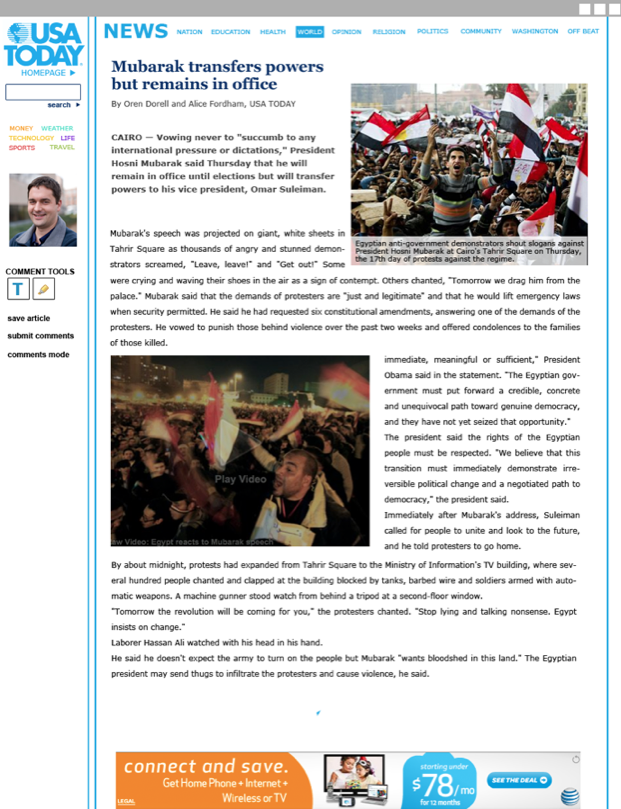
The three directions that I brought to the table last (last, last) class (sorry, a bit behind) are these. I tried to refine the idea of my modular, customizable design. The direction that I ended up going along with was a combination of the first and third designs shown here. Color coding seems like a logical convention to use here, and it is something that was used on the original USA Today webpage.
Time to refine!


Time to refine!


February 10, 2011
Subculture: Interviews
Dianne–wife and caregiver to her brain damaged husband
Sandra–wife and caregiver to her husband who had back surgery
Nancy–Currently a part time caregiver for and elderly women
Gwen–former caregiver for a variety of patients
There was a lot of great insight gained from these interviews. Each woman that we talked to (although our topic is not exclusive to female caregivers) had a lot of great answers for our questions and gave wonderful, entertaining stories and examples that we will be able to use in our subculture data collection.
As we asked about the pros and cons of being a caregiver, all of the ladies seemed to give us similar answers. To start off with, they all truly enjoyed what they did, and didn't consider it a hardship, even if it wasn't by choice that they were in their situation. They have big hearts and only have the best interests of their patients in mind. While it can sometimes be difficult to handle the mental and physical strain their responsibility puts on them, they would have it no other way. They all seemed to unanimously say that patience is the key to the work they do, since sometimes it is slow, or sometimes patients are not cooperative, or something goes wrong.
They have many concerns that come along with their job that might not be that obvious just from doing secondary research. For instance, their own age is a huge concern among them. Since they are baby boomers, 46-64, they are beginning to encounter health concerns that come with getting older. Along with the physical strain that they put on themselves while caregiving, this can add up to a decline in health. Also, money issues are another problem for caregivers and their families. Depending on the state of the person they are caring for, they might have to give up their job to take care of the person. And also, their patient might have been formally employed. Then, with the loss of one or two incomes coupled with medical bills, finances are a big concern.
Overall, this is a group that has a lot of love and a lot of problems. They also have great stories to tell.
For more on this, watch for Familial Baby Boomer Caregivers: An Insight by Kelsey Anderson and Joseph Shopen in your local bookstore. (tehehe)
February 9, 2011
C/ID Reading
Branding to think about:
Which also makes me think, there are certain times when it is best for the brand to NOT be overstated. Too much going on is overwhelming.
That's not to say, though, that the imagery can have its time to shine. My favorite assortment of brand applications is the Mori Art Museum. It has a simple but very bold design, with several elements that the designers can alternate across different media. Something to consider? Yes.
- Signage
- advertisements
- printed material
Which also makes me think, there are certain times when it is best for the brand to NOT be overstated. Too much going on is overwhelming.
That's not to say, though, that the imagery can have its time to shine. My favorite assortment of brand applications is the Mori Art Museum. It has a simple but very bold design, with several elements that the designers can alternate across different media. Something to consider? Yes.
February 7, 2011
Subculture: Shadowing
Dianne:
1-30-10
6.00 pm
She begins sitting on the couch, she is watching the entertainment news programs. She switches to a country music channel. Her husband is wheelchair-bound. It is a very quite house. They are both very quiet. While we are talking to her, Steve makes sounds, Dianne tells her helper that he needs to go to the bathroom. But Dianne doesn’t help with this, she tells us she can’t do all the physical lifting, that’s what the helper is for. She feels kind of awkward with us here, she seems really stiff. We sit for a while, making small talk. He husband thumps his foot against the wheelchair, and mumbles something. He cannot form words very well. She gets up and goes straight to him. He talks to her again, not making any words again. She is talking to him in a quiet, soothing voice. Simple language. Not like talking to a child, but still very basic. She somehow understands what he’s saying–Joseph and I don’t understand anything he says. She wheels him over to the kitchen table, and sets his out place mat. His is very still, she says that she must have been right that he was hungry. There is a younger woman in the kitchen, she is one of the part-time helpers (she is younger, looks like her twenties?) Dianne joins her in the kitchen and works on preparing the meal. It’s something mushy. She sets the food in front of Steve, and she helps him put his special silverware in his hands, and then the helper takes over for her. We continue with the interview.
__________________________
From the shadowing, Joseph and I gleaned some key insights to the everyday life of Dianne, a woman who is on the "heavy care" end of our subculture spectrum. We did this shadowing when we initially came to interview her. Earlier, during the interview, she mentioned that she is very reliant on media sources such as the internet (she loves pandora), email, and her television with satellite. This seemed to prove true as she was always a bit distracted by the TV But when her husband needed help, she was quick to jump to his aid.
Sitting with her, we got a clear idea of what some of her values were. She values the time that she spends with her husband, in contrast to the idea that he could be in assisted living right now instead. She does all that she can to keep her husband with her. Her shortcomings include her physical limitations that keep her from being able to give him full care. Because of this, she relies on the 24/7 support of hired helpers. She says that it is hard to find helpers for certain hours and certain days (like no one wants to come in during church time).
Anyway, her simple language is something that seemed to show her speaking style, as well as her knack for patience (an essential skill, all care takers have noted). Even though it is unclear to other people, Dianne was able to understand what her husband said to her, and he seemed to understand what she was saying back to him.
February 2, 2011
Symposium Concepting
Typography: one of the basic elements of graphic design. But more than that, typography is something that you experience non-stop, all day. This (poster/postcard/whatever artifact they’re reading off of) is typography. The girl wearing sweatpants with the word “juicy” on the back? That’s typography. The alphabet cereal you had for breakfast? The book you’re reading for English? The little smilie face you put at the end of your last text? Of course, all are forms of typography. But what are some of the kinds of typography you don’t see everyday? Come to the (symposium name here) to learn about the broad spectrum of what is TYPE.
Abstract to Practical: A Typographic Exploration
Type: An Exploration Of The Written Laguage
Typographic Breakdown: The construction and deconstruction of all things type.
Letter Mania
Now You Read It, Now You Don’t
It’s not all Books and Posters: Type explanations and experiments of KCAI graphic design students.
Typographic Map: Covering all corners of what lies within its borders.
ty·pog·ra·phy - Defining and redefining type.
[tahy-pog-ruh-fee] - Defining and redefining type.
I shot the serif: wrangling the elusive typography.
Typography Trapeze: A circus of exhibits and activities revolving around the world of type.
Since we have another snowday, and therefor a while before we review this list, it is subject to change between now and then. :)
February 1, 2011
Baby Boomer Care Givers Analysis
To begin with, Baby Boomers are a group of people that span 20 years in age, from 46-64. This means that they are getting older, and might have parents that need caring or spouses that require help. The caregivers that we focused on were those that either fell into this because their family situation required it, or used caregiving as a part-time job now that they were wrapping up their careers. After interviewing a number of caregivers, we noted many traits that they seemed to share, as well as information such as their frustrations, worries, and concerns.
Caregivers of the Baby Boomer generation are genuinely concerned for the wellbeing of their patients, and are dedicated to whoever they are helping. During our research, it came up a lot that the baby boomer generation is an altruistic one, and this seemed to prove very true as all of our interviewees had past volunteer experience before becoming caregivers. A trusting personality is an essential quality of these caregivers, as they are asked to do a lot and they have to be careful not to offend or demean their patients throughout the day. This can sometimes be difficult, since sometimes patients can really give them a hard time. As one woman, Gwen, put it, “you’ve got to learn how to appease them, because you’re both set in your own ways.” But their patient, upbeat attitude keeps them going, in addition to being able to adapt to the person they’re caring for.
The caregivers we talked to were all very modest, downplaying their importance and happy with the gratitude they got. This surprised us, as we thought they might feel more burdened than they seemed to be. But they all seemed to love what they did and were content with the personal satisfaction they got from doing this.
Another thing that came as a surprise to us was that none of the women we interviewed had any professional experience that would have trained them to be care givers. Nancy said that all her experience came from being a mother, and another caregiver, Sandra, said that aside from some instructional packets (she is caring for her husband with a back injury), she relied learning quickly and being a good communicator to make things run smoothly. When shadowing Dianne, it seemed like she must have had some sort of training, the way she adjusted the wheelchair of her handicapped husband, or described all the equipment they used.
One worry that many baby boomer care givers seem to share though, is that they will soon need to start thinking about caring for themselves. As they age, they will be less and less able to take care of their patients, so they need to both find ways to continue aiding the patients, while accounting for any help they will begin to need. Financially, too, this is something that concerns our subculture quite a bit.
Subscribe to:
Posts (Atom)